My Blog
Archive:
- 2012
- 2011
Tags
- dental injuries (2)
- mouthguards (1)
- oral health (10)
- sports dentistry (1)
- cosmetic dentistry (5)
- teeth whitening (1)
- periodontal (gum) disease (3)
- oral hygiene (5)
- common symptoms (4)
- fillings (2)
- veneers (3)
- smile makeover (4)
- root canal (2)
- bad breath (1)
- replacing teeth (1)
- missing tooth (1)
- dental implant (1)
- x-rays (1)
- tooth decay (1)
- tooth colored fillings (1)
- chipped tooth (1)
- bonding (1)
- celebrity smiles (4)
- orthodontics (2)
- braces (1)
- clear aligners (1)
- diabetes (1)
- dental injury (1)
- crown (1)
- fluoride (2)
- snoring and sleep apnea (1)
- invisalign (1)
- clear orthodontic aligners (1)
Categories:
My Blog
Posts for category: Oral Health
Guidelines regarding the concentration of fluoride in water have recently been changed by the US Government's Department of Health and Human Services (HHS) and the Environmental Protection Agency (EPA). These agencies recommended a reduction of fluoride in water supplies to 0.7mg/L, modifying the original recommendations provided in 1962 by the US Public Health Service.
What is fluoride, and why add it to water supplies?
Fluoride is a chemical form of fluorine, a naturally occurring element. For decades, scientists have carried out studies on the effects of fluoride in water, and they have proved that fluoride strengthens tooth surfaces and makes them resistant to decay. A fluoride concentration of about one milligram per liter (1 mg/L), or 1 part per million (1ppm), in the water supply is associated with substantially fewer cavities. This concentration of fluoride (equivalent to a grain of salt in a gallon of water) has been found to have no negative health effects.
The Center for Disease Control (CDC) says that fluoridated water is one of the ten most effective public health measures of the 20th Century. The optimal amount of fluoride necessary to make teeth resistant to decay turns out to be between 0.7 and 1.20 milligrams per liter (mg/L). A certain amount of fluoride occurs naturally in water supplies, and communities have added fluoride to bring the amount up to the optimal recommendations.
How does fluoride you drink get into your teeth?
The fluoride you drink in your water is deposited in your bones. Bone is an active living substance that is constantly broken down and rebuilt as a normal body process. As this happens the fluoride is released into the blood, from which it can enter the saliva and act on the tooth surface.
What about fluoride from other sources?
Americans now have access to many sources of fluoride in addition to the water they drink. These include foods, beverages and toothpaste. As a result, dentists have begun to notice an increased prevalence of a condition known as Dental Fluorosis.
What is Dental Fluorosis?
Dental Fluorosis can occur when teeth, particularly in children, receive too much fluoride. This condition is a mottling or uneven staining of the tooth surface enamel. There may be small white spots or extensive brownish discolorations. The mottled enamel is still resistant to decay, but it may be unattractive in appearance.
What is the idea behind the new guidelines?
With the new guidelines, fluoride is kept at the lower end of the scale of the optimal concentration for strengthening teeth against decay. At this end, there is room to add consumption of fluoride from other sources such as foods or toothpaste. In short, it is the best of both worlds.
Contact us today to schedule an appointment to discuss your questions about fluoride. You can learn more by reading the Dear Doctor magazine articles “Fluoride & Fluoridation in Dentistry” and “New Fluoride Recommendations.”
Research has revealed that over 12 million Americans suffer from Obstructive Sleep Apnea (OSA), a condition that occurs when the upper airway (tissues at the back of the mouth and throat) collapse causing significant airflow disruption or even no airflow whatsoever for 10 seconds or more. It can leave you feeling tired, depressed, irritable, as well as cause memory loss and poor concentration. But, did you know that we can help treat your sleep apnea?
The primary method dentists who are trained in sleep medicine use to treat OSA is through the use of an oral appliance. Similar in look to an orthodontic retainer or sports mouthguard, oral appliances are designed to maintain an opened, unobstructed, upper airway during sleep. And while there are many different oral appliances available in the marketplace, less than 20 have been approved through the FDA (Food and Drug Administration) for treating sleep apnea. The key to success is to avoid those over-the-counter (OTC), generic mouthguards and instead use a professionally made and custom-fitted oral appliance, made from a precise models of your teeth and mouth. They are best at keeping your airway open and preventing the muscles and soft tissues from sagging down when relaxed during sleep. Other advantages of custom-fit oral appliances are that they can reposition your lower jaw, tongue, soft palate and uvula (the tissue in the back of the throat that dangles like a punching bag); stabilize your lower jaw and tongue; and increase the muscle tone of your tongue.
But Is Treatment Really That Important?
Absolutely! If undiagnosed and/or left untreated, sleep apnea can be life threatening. It can cause heart attacks, strokes, impotence, irregular heartbeat, high blood pressure, and heart disease — many of which can kill you.
Want To Learn More?
To learn more about sleep apnea, read the Dear Doctor article, “Snoring & Sleep Apnea.” Or if you are ready for a thorough examination and to discuss your snoring, contact us today to schedule an appointment.
The CDC (Centers for Disease Control and Prevention) calls fluoridation of drinking water one of the ten most important public health measures of the 20th century, along with such measures as vaccination and motor-vehicle safety.
A fluoride concentration of about one milligram per liter (1 mg/L), or 1 part per million (1ppm), in the water supply is associated with substantially fewer cavities. This concentration of fluoride (equivalent to a grain of salt in a gallon of water) has been found to have no negative health effects.
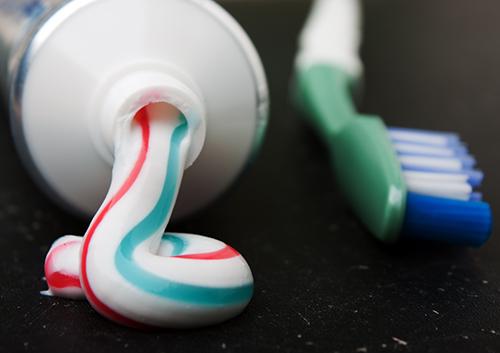
The connection between fluoride and oral health was confirmed in the first half of the 20th century, and by 1955 the first clinically proven fluoride toothpaste was launched. Fluoride-containing toothpastes are common today, along with other fluoride-containing products.
Protective Effects of Fluoride
Ongoing studies have shown that fluoride has both a systemic (through the body) effect and a local effect at the tooth surfaces. Tooth decay takes place as part of a kind of active war between de-mineralization and re-mineralization, in which acids produced by bacteria in plaque (a biofilm in your mouth) soften and dissolve the minerals (de-mineralization) in the tooth's surface. At the same time, the saliva bathing the tooth acts to re-harden the tooth's surface by adding minerals back (re-mineralization). If fluoride is present in the biofilm and in the saliva, it protects against de-mineralization.
The fluoride you drink in your water is deposited in your bones. Bone is an active living substance that is constantly broken down and rebuilt as a normal body process. As this happens the fluoride is released into the blood, from which it can enter the saliva and act on the tooth surface. The fluoride in toothpastes and products like rinses is delivered directly to the tooth surface. Fluorides can also be eaten in foods with high fluoride content such as teas, dry infant cereals and processed chicken, fish and seafood products.
Problems with Over-use
Eating or swallowing too much fluoride can contribute to a discoloration of teeth called dental fluorosis, which varies in appearance from small white striations to stained pitting and severe brown mottling of the enamel. To avoid this effect, monitor children's tooth brushing to make sure they use only a small amount of fluoride toothpaste and do not swallow it.
Adding fluoride to water has been controversial because some people believe that it may cause other harmful effects. However, most health experts believe that fluoridated water carries no significant health risks and significantly contributes to public health by preventing tooth decay.
Contact us today to schedule an appointment to discuss your questions about fluoride. You can also learn more by reading the Dear Doctor magazine article “Fluoride & Fluoridation in Dentistry.”
If you are experiencing cracking in the corners of your mouth, you have a common condition called perleche or angular cheilitis. Perleche comes from a French word meaning “to lick,” because people tend to lick the irritated areas of their mouths. Angular cheilitis comes from cheil meaning “lip,” and itis meaning “inflammation.”
Sufferers from perleche are usually young children who drool in their sleep, young adults with braces, and older adults who have developed skin wrinkling with deep lines at the corners of their mouths. Perleche may become worse in the winter, when cold weather and dry air dries out the skin of your lips. You may lick your lips often to keep them moistened. This constant licking of the cracked areas can lead to infection, most commonly from a type of yeast called candida albicans. Sources of infection can also include dentures that are not cleaned frequently enough, missing teeth that cause facial changes and added skin wrinkling, and health conditions such as iron-deficiency anemia, vitamin B deficiency, diabetes and cancer.
Conditions associated with perleche can be treated in a number of ways. Yeast is a type of fungus, so to combat a chronic yeast infection you need antifungal medication. This may be taken orally or applied to the cracking places as an ointment. You may be asked to dissolve a medicated lozenge in your mouth and then swallow it, so that its medicine treats both the mouth surface and the entire body. Antifungal medications may be combined with other medications to lessen inflammation and assist skin repair.
If the skin-cracking is related to serious underlying conditions such as missing teeth, improperly fitting dentures, or systemic health conditions, these must be treated in order to keep the perleche from recurring. We can perform a dental assessment to check the health of your teeth, gums, and lips, and you may also want to visit a dermatologist to see if treatments can improve and rejuvenate the quality and appearance of your facial skin.
Contact us today to schedule an appointment to discuss your questions about cracks at the corners of your mouth. You can also learn more by reading the Dear Doctor magazine article “Cracked Corners of the Mouth.”
As America's toughest trainer on the hit television program The Biggest Loser, Jillian Michaels helped people learn that they hold the power to change. And if anyone knows about the power of changing oneself, it is Jillian Michaels. In her recent interview with Dear Doctor magazine, Jillian discusses her childhood, the trauma of being overweight as a teenager (5' 2" and 175 pounds), and the day her life forever changed when she started martial arts training at a gym. “I started training when I was 17 and always loved it but never thought it would end up being my career,” she said.
Jillian also reveals that when she was a child, she broke her two front teeth and had them repaired with crowns. She added, “Now, I generally wear a mouthguard if I am doing anything where my teeth have any chance of being knocked out.”
When it comes to replacing teeth that are broken or damaged from trauma, or teeth that are damaged because of dental decay, grinding habits, or acid erosion, crowns may be your best option. And because the tooth enamel is damaged, a bit more of it must be removed before we can place a crown. Generally speaking, we must remove about 2 millimeters of tooth structure to place a crown. Once the crown is placed, the tooth will always require a crown, as this is an irreversible procedure. However, the good news is that a crown not only mimics the look and feel of a natural tooth, but it is also the optimal long-term solution. On average, a crown last between 5 and 15 years and requires no special maintenance. In fact, you should treat your crown as you do your natural teeth, with a daily cleaning regimen of brushing and flossing and routine dental examinations and cleanings.
To learn more about crowns or other cosmetic procedures, contact us today to schedule an appointment so that we can conduct a thorough examination, discuss any questions you have as well as what treatment options will be best for you. Or to learn more about crowns now, you can continue reading the Dear Doctor magazine article “Porcelain Crowns & Veneers.” And to read the entire interview with Jillian Michaels, please see the article “Jillian Michaels.”